Modern Slavery Statement
Tapestry, Inc. Fiscal Year 2025 Modern Slavery and Child Labor Statement
This Statement has been prepared pursuant to the Australia Commonwealth Modern Slavery Act 2018, California Transparency in Supply Chains Act 2010, Canadian Fighting Against Forced Labour and Child Labour in Supply Chains Act 2023, and UK Modern Slavery Act 2015. It sets out the steps Tapestry, Inc. and its subsidiaries (“Tapestry”) have taken to prevent forced labor and human trafficking (collectively referred to herein as “modern slavery”) and child labor in our business operations and supply chain. This Statement constitutes our disclosure for the reporting period of June 28, 2024, to June 29, 2025 (“FY25”). We have prepared a single statement for Tapestry because we have global policies and compliance procedures relating to modern slavery and child labor across our business. However, not all our business entities are subject to the Acts mentioned above. To the extent applicable, the signature pages to this Statement include additional disclosures specific to the entities required to prepare a statement under one or more of the laws listed above.
About Tapestry
Our global house of brands unites the magic of Coach, kate spade new york and Stuart Weitzman. Each of our brands is unique and independent, while sharing a commitment to innovation and authenticity defined by distinctive products and differentiated customer experiences across channels and geographies. We use our collective strengths to move our customers and empower our communities, to make the fashion industry more sustainable, and to build a company that’s equitable, inclusive, and diverse. Individually, our brands are iconic. Together, we can stretch what’s possible. To learn more about Tapestry, please visit www.tapestry.com. The Company’s common stock is traded on the New York Stock Exchange under the symbol TPR.
For the majority of products, Tapestry contracts directly with manufacturers to produce products for the Coach, Kate Spade, and Stuart Weitzman brands. Our network of suppliers is global. To learn more about our Tier 1 suppliers, please visit Suppler List
Each brands’ design teams are responsible for the design and specifications of each product, while Tapestry’s sourcing teams are responsible for selecting raw materials and requesting product samples from the appropriate manufacturer.
Tapestry’s operations team in Asia plans our production and monitors manufacturing progress, ensuring quality requirements are met and standard operating procedures are being followed. Goods are then shipped via ocean carriers to our fulfillment centers in the United States (actual location varies by brand) where they are then further transported via truck or rail to our 3rd Party Logistics partner for distribution.
Although our brands are unique and independent, we have instituted common policies and procedures across our business to address modern slavery and child labor. These are discussed in more detail below.
1. Policies
Tapestry’s Global Business Integrity Program governs how we do business and consists of policies and procedures to hold ourselves, our employees and our partners to the highest ethical and legal standards. These principles and philosophies are not only based on laws and regulations but are also founded on dignity and respect for the individual, a strong commitment to common sense, fairness, diversity and ethical business practices and policies.
We are guided by the following five documents, which we share publicly on the Global Business Integrity Program page of our website:
- Code of Conduct
- Global Operating Principles
- Supplier Code of Conduct (“SCOC”)
- Anti-Corruption Policy
- Animal Welfare Policy
To monitor adherence to these principles, we also have an Ethics and Compliance Reporting System (www.tapestry.ethicspoint.com or 1-800-396-1807) through which employees and others can report issues with and deviations from our principles and philosophies.
We recognize our responsibility to respect and uphold human rights throughout our entire supply chain, including our manufacturing partners. We continue to develop strong relationships with our supply chain partners through clearly defined standards and expectations, open communication and zero tolerance for human rights violations. We require suppliers to sign and comply with our SCOC.
Our SCOC prohibits the use of modern slavery and child labor. All of our suppliers must comply with our SCOC, which covers social, ethical and minimum environmental business requirements. We regularly update the SCOC as conditions and global regulations require. Our compliance and legal teams work hand-in-hand to maintain and update the SCOC and our direct suppliers, as well as other suppliers involved in producing our products undergo labor and human rights audits against our SCOC (described in greater detail below).
2. Due Diligence Process
Our SCOC sets guidelines and requirements for doing business with us for firms from whom we procure products and services, including contractors, joint venture partners, and suppliers. Suppliers must certify the SCOC at onboarding. The majority of our factory partners receive live and/or virtual training on areas covered in the SCOC every other year. Workers in the supply chain are also provided information on how to access the hotline, as part of the grievance mechanisms in place, and are reminded of these mechanisms during audit visits.
Tapestry collects certifications from direct suppliers regarding their compliance with Tapestry’s standards for employment – including a certification from the supplier that all materials sourced for and incorporated into Tapestry products comply with modern slavery and child labor laws of the country or countries where the supplier is doing business.
Tier 1 finished goods suppliers and certain of our Tier 2 raw material suppliers undergo semi-announced, annual audits by independent third-party audit firms. When a factory is found in violation, we work with them to develop a corrective action plan based on the audit findings that supports sustainable remediation . We reserve the right to develop exit plans or terminate our relationship with suppliers based on compliance issues.
In FY2025, approximately 206 audits were conducted; 78% of the audits were of our Tier 1 suppliers and 22% were facilities beyond Tier 1. Of these audits, 100% were semi-announced. More than 3,010 workers were interviewed throughout this year’s audit process, and around 8% of the audits performed included an interview with a trade union representative.
3. Remediation
In our efforts to identify the risks of modern slavery and child labor within our supply chain, Tapestry primarily concentrates on the operations of our Tier 1 and strategic Tier 2 suppliers. Given that Tapestry’s audits conducted in FY2025 did not uncover evidence of modern slavery or child labor, remediation measures were not deemed necessary.
4. Training
Tapestry holds internal trainings for selected supply chain management personnel to ensure they are knowledgeable and aware of supply chain issues and concerns, including relating to human trafficking and slavery. A particular focus on the training is risk mitigation.
Tapestry provides onboarding training sessions for new suppliers and conducts regular social compliance training for existing suppliers. Additionally, we provide biennial topic-specific training to our suppliers, ensuring comprehensive support for their compliance efforts.
5. Modern Slavery and Child Labor Risk
Tapestry faces its greatest risk exposure to modern slavery and child labour primarily through its supplier network. These risks are particularly prevalent in regions and sectors deemed to be higher-risk. Acknowledging the inherent complexities and challenges in ensuring modern slavery compliance across our extended supply chain, we remain vigilant in addressing these concerns.
We believe that the risk of modern slavery and child labor in our own workforce is minimal due to the strength of our internal employment policies and procedures.
6. Oversight and Management of Risks
Our Corporate Responsibility (“CR”) strategy, including oversight, management and identification of risks, including risks related to modern slavery and child labor, is ultimately governed by the Tapestry Board of Directors and driven by an ESG Task Force.
7. Participation in Multi-stakeholder Initiatives
Addressing modern slavery is beyond the capacity of any single company to address. Therefore, in addition to the actions outlined above, Tapestry participates in multi-stakeholder initiatives to address the risk of forced and involuntary labor in our industry and supply chains, including:
- Tapestry is a member of the United Nation’s International Labour Organization’s Better Work Programme which works to improve working conditions in the garment industry.
- Tapestry participates in RISE: Reimagining Industry to Support Equality, an initiative to support collaborative industry action at scale to advance gender equality in global garment, footwear and home textiles supply chains.
- Tapestry is a participant of the United Nations Global Compact (“UNGC”). We have aligned our strategies and operations to the UNGC’s Ten Principles on human rights, labor, the environment and anticorruption. Through the UNGC, Tapestry reports on our progress in relation to the Ten Principles annually.
8. Measuring Our Effectiveness
Tapestry’s ESG Task Force meets quarterly to set and drive company-wide CR strategy, including our social and labor related approach. The ESG Task Force includes members of Tapestry’s Executive Committee, including our General Counsel and the Chief Supply Chain Officer, and cross-functional representatives from major business units at Tapestry. Our Board of Directors approves long-term CR goals, strategic moves or major plans of action and receives updates at least annually.
We use the following metrics to measure our effectiveness in mitigating the risk of modern slavery and child labor in our business and supply chains:
- Use of labor monitoring and payroll systems to check eligibility of employees in our operations;
- The number of completed social audits of our suppliers’ facilities by Tapestry personnel and designated third parties, and the findings of those audits;
- The number of and contents of any modern slavery related claims submitted via our hotline; and
- The number of suppliers trained annually on our corporate policies and expectations, with special emphasis on modern slavery and child labor.
9. Longer Term
Tapestry remains steadfast in our commitment to continuous improvement across all facets of our business operations, including our proactive stance against risks related to modern slavery and child labor and our dedication to maintaining an accountable and transparent supply chain.
In the upcoming fiscal year, we are resolved to sustain our current initiatives aimed at addressing modern slavery and child labor risks within our business and supply chain. We have outlined several actions to bolster our efforts:
- Completion of a human rights risk assessment and definition of our salient issues, concluded at the end of the fiscal year.
- Periodic evaluation and potential refinement of Tapestry’s existing policies and procedures to ensure alignment with best practices.
- Implementation of risk-based training modules tailored for suppliers within our supply chain.
These proactive steps underscore our commitment to combatting modern slavery and child labor risks and fostering a culture of accountability and responsibility within Tapestry and throughout our supply chain.
***
UK Modern Slavery Act 2015
The UK Modern Slavery Act 2015 requires certain organizations to disclose the steps they have taken to address slavery and human trafficking in their own business and supply chains. This Statement serves as the disclosure for Tapestry and Coach and kate spade new york for fiscal year 2025. This Statement was approved by the board of directors of Tapestry on August 7, 2025 and signed by a director of that entity.
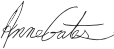
Solely for purposes of the UK Modern Slavery Act, this Statement was signed by Anne Gates, a director of Tapestry, effective August 7, 2025.